I am a PhD candidate at UC Irvine, in Biomedical Engineering and Radiological
Sciences. I work on foundation models and multimodal learning, usually where the data is
small and the evaluation is the hard part.
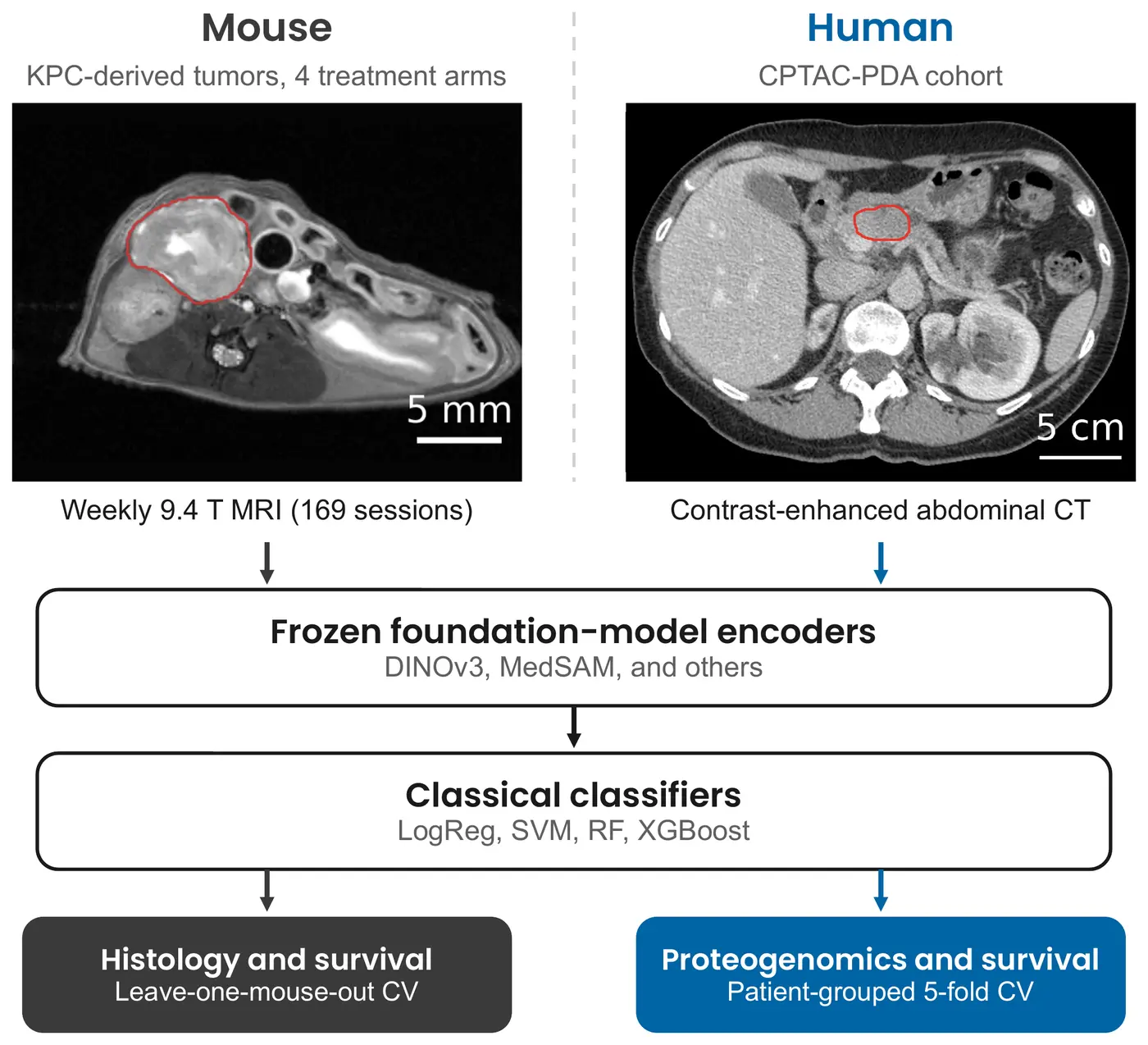
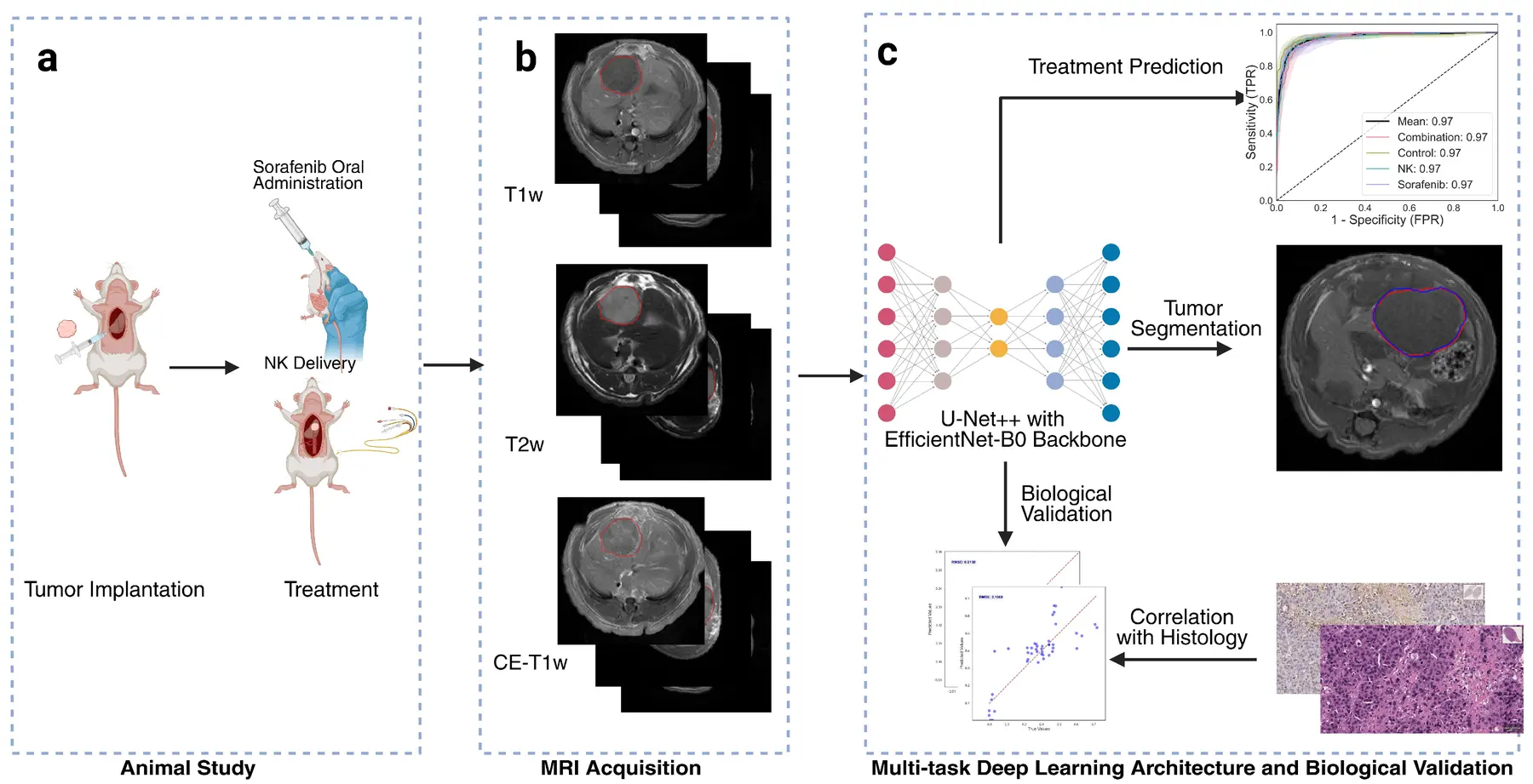
Most of my work starts from the same constraint. Clinical datasets are limited, and the
thing worth predicting, how a tumor is actually behaving, sits inside a biopsy. Imaging is the
opposite: non-invasive, repeatable, and already part of standard care, but it shows anatomy
rather than biology. My PhD is about closing that gap with models pretrained elsewhere, so that
the biology is what gets learned here, not the representation.
A version of the same question comes up outside medicine: is the model using the image, or
something easier? Post-training a vision-language model, I compared reinforcement learning
against plain supervised fine-tuning on the same data. RL earns its place where reasoning pays,
about ten points on chart questions, and its gains mostly vanish when the image is blacked out,
as they should. Fine-tuning's partly survive: the model has learned answers it can give without
looking. Applied to two 3D CT benchmarks, the same test showed that most of their published
accuracy was reachable without the scan.
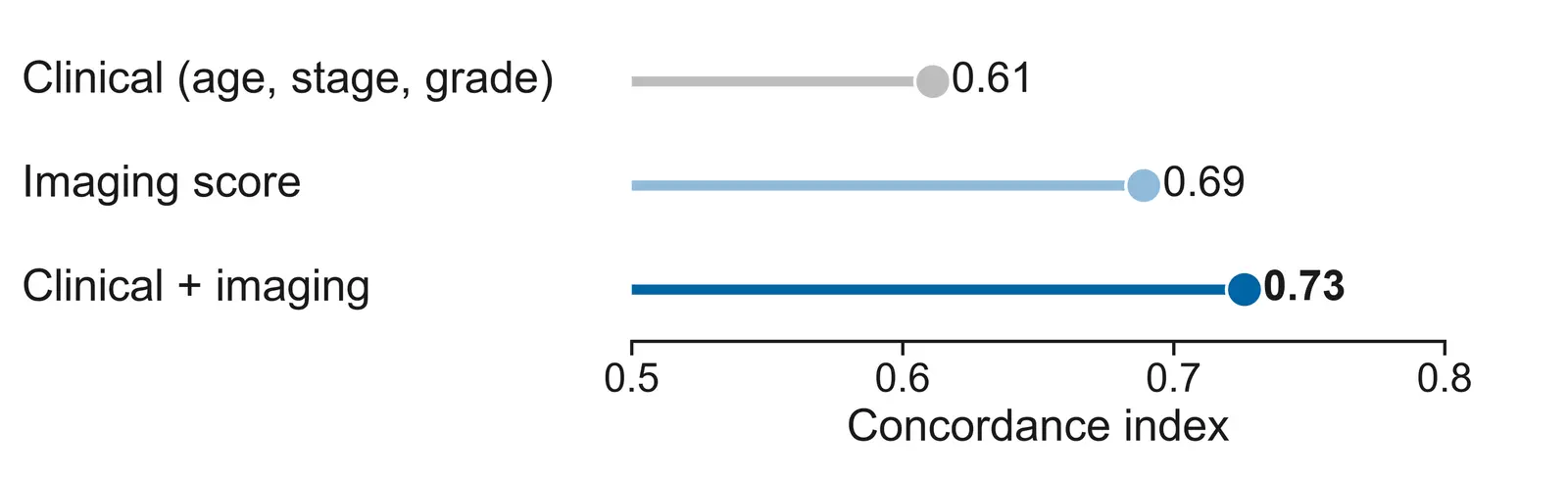
Both lines of work arrive at the same place. A number is worth what you checked it against,
which is why the medical models are held against stained tissue and the language models
against a blacked-out image.
Before the PhD I spent two years as an NLP engineer at Tencent QTrade, building named-entity
models for a brokerage chat platform with more than 500,000 daily users. That is where I learned
what a wrong prediction costs once it is serving live traffic. Away from research I photograph
landscapes, mostly in the American West.